Wednesday, April 27, 2011

Glider Challenge: Deliverables


1) What's the challenge?
              The challenge presented by this activity is to design a glider which is able to stay in the air the longest (Hang Time) and is also able to travel the farthest.


2) Brainstorm solutions:
               For this activity we were not presented rules for the Brainstorming phase
               Our immediate solution for this activity was to make the wingspan large so that lots of air would be caught by the wings


3) Specify:
-Criteria
-Constraints (be specific about materials available)

               The criteria was that the plane had to be able to fly


4) Develop Solutions:
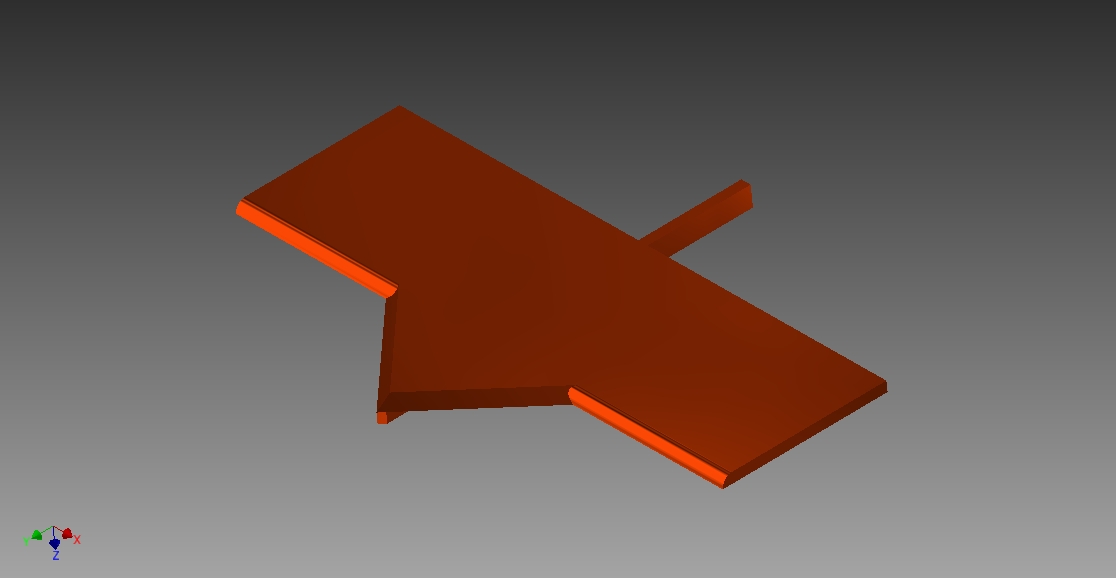
-Sketch (with labels)
-Model in CAD


4 Quadrant Feedback Square


Reverse Engineering: Mechanicnal Product - Functional Analysis


1. What is the purpose or primary function of the object?

  • For most people I think the primary function of the object is to make calls and send text

2.Make an educated guess as to how this product operates. Use simple machines’ terminology to explain the object’s sequential operation.

  • For the texting sense of the machine I believe that as the buttons are pushed they push down on sensors that tells the software to put that letter
  • For the screen sliding I think that there is a ridge that the top part of the screen moves along and then when it gets to the end of the track there is a stopper
3. Identify the system inputs, intended product function, and outputs. Use power point to create a "black box" graphic like the toothbrush example discussed in class. Save the slide as a .jpg image and post it to answer this question.
                (powerpoint image)


5. What is it about this device’s function that you cannot identify, because the mechanical components are hidden from plain view?


          You cannot see the inner workings of the phone because they are blocked from view by the chassis of the  phone, also you can't see the stuff that makes the screen workl.


Monday, March 14, 2011

TED pt I - Ideas worth Spreading?


1) What is the TED organization about?

  • The TED organization is an organization that tries to get less known ideas out to a broader audience
2) What is the purpose of their website and how does the functionality of their site support that?

  • The purpose of the website is to spread ideas and the website helps sort the ideas
3) As Engineers and Problem Solvers, which topic areas (the choices from the "Show talks related to:" section on the sidebar) are of most interest to us? Justify your answer.

  • The two best sections under the (show talks related to) tab are technology and science because not only do the have to do with engineering but the also have to do with problem solving
4) Based on your previous answer, what are 3 talks (videos) on the site that appear like they would be of most interest to you as an Engineer/Problem Solver? Justify your choices.

  • (Lisa Gansky: The future of business is the "mesh") because I think that in the future Engineering will be a lot bigger part of everybody's lives
  • (Gero Miesenboeck reengineers a brain) because it has to do with reverse engineering
  • (Cynthia Breazeal: The rise of personal robots ) because robots are the future
6) How could you get involved in the field/technology/issue you chose to hear about? What experience/skills/training/education would you need to learn to get involved with this field?

  • The most important thing i would need to do is go through college and probably grad school

Friday, March 4, 2011

Reverse Engineering: Mechanical Product - Visual Analysis


  • The product at hand is a cellular phone and the pictures in order are side, top, and then front view
  • This item here has a good sense of balance and was probably designed to look very sleek
  • The purpose of this device was to make calls and text people
  • The demographic or target audience is probably people between the age of 10 and 35
Here is a multi view drawing i made

Monday, February 28, 2011

Visual Design: Elements and principles

Questions:
1.Line, Color, Form/shape, Space, Texture, and Value
2. Balance, Rhythm, Emphasis, Proportion, Unity
3.
Image 1


  • Theres lots of lines, nice use of contrasting colors and unity

With all the different colors and unity


This lined Paper has a lot of space and lines


  • This table is a good example of Balance because every piece of the table is the same
Image 1

  • This example is a good example of a few things but I really think that it could be improved by maybe removing the picture of the bird on the side

Friday, February 25, 2011

Opt in: Super Bowl ads


  • This ad of a Chevrolet Camaro was my favorite of all the super bowl ads because it was about an awesome car, had hot chicks, and had a sense of humor
  • This one minute spot during the super bowl cost 6 million dollars
  • Chevrolet would have to sell approximately 272 Camaro cars to pay for the commercial which coincidentally is approximately the number of Camaro cars sold in 2 days  

Wednesday, February 23, 2011

Graphic Design: What's Going On In This Design?


  • This advertisement came from a wired magazine
  • This is an advertisement of the Chevy Equinox
  • My partner Jake and I determined the this ad is more directed toward women than men and his ad of a carbon fiber Ferrari is more directed towards men


Conclusion:
1. Trends are things that are popular at a given moment. Trends are important to Graphic design because it can show the designer whats cool and whats not
2.Human nature plays a role in the demographic because you wouldn't want to be advertising a bunch of meat or steak to someone in the PETA group
3.you could identify your audience by who reads or would see your ad. For example a good place to advertise computers would be in a wired magazine
4. You must discover if your demographic audience would even be available to purchase your product or if they would like to purchase your product